Bringing Light to Families Displaced in South Sudan
Bringing Light to Families Displaced in South Sudan In early March 2026, extreme violence in Abiemnhom County devastated entire communities,

Published May 24, 0022 · Updated February 18, 2026
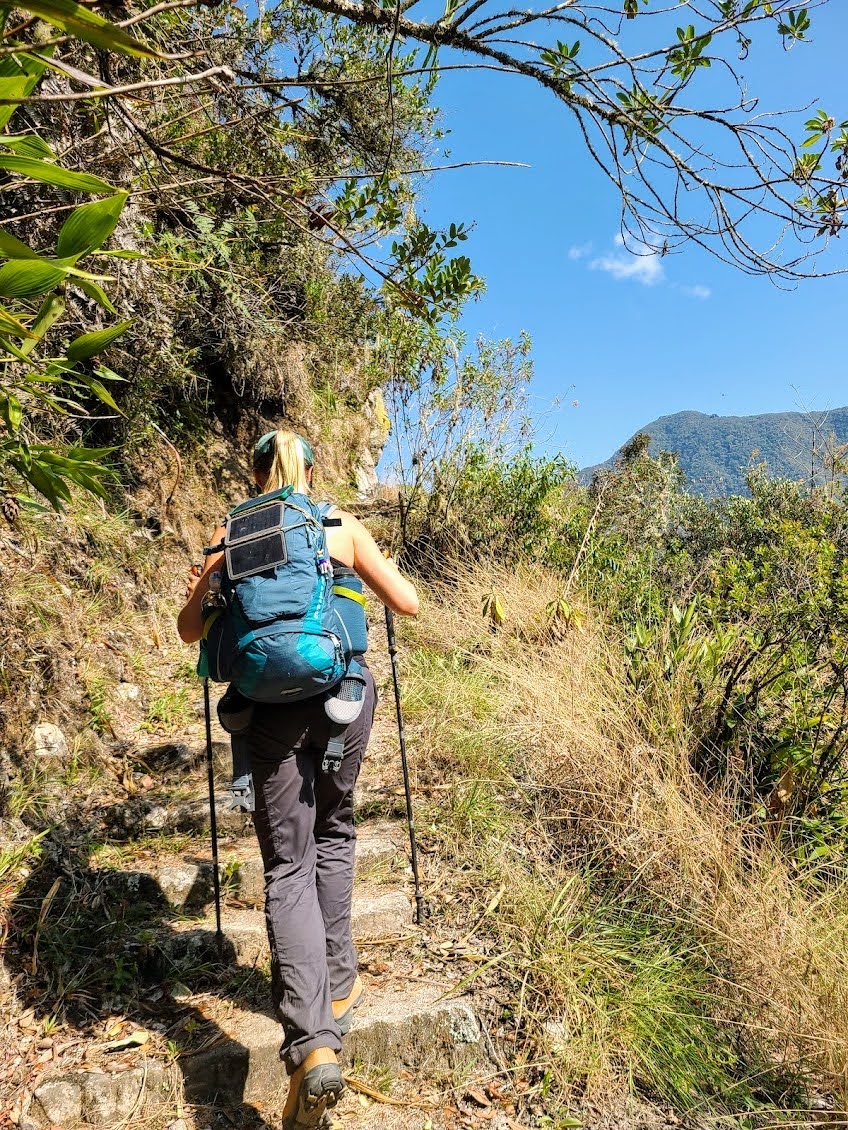
1. How much power do you need to bring?
Start with a list of all the electronic devices you plan to take with you, look up their battery capacity, estimate how long you will use them each day and for how many days you plan to be on your trip.
That may sound daunting, but let’s look at an example:
Let’s say you plan a four day trip and decide to carry
For your trip, you wouldn’t need to charge your inReach but would need to charge your watch every day and you’ll most likely top off your phone each night. Thus, you would need 4,589 mAh in battery capacity for the trip.
To reduce the amount of power you need, you could also consider bringing solar powered lights like our Luke Lights for a more specific “task oriented” light or the Luci Light for ambient light.
2. What does it weigh?
With battery banks and solar chargers, there is a direct correlation between the capacity and size of the power source and its weight. So this is another reason to calculate how much you need so that you don’t lug around 20000 mAh of power (which can weigh nearly 1 pound!) when you only need 5,000.
3. What are the power options?
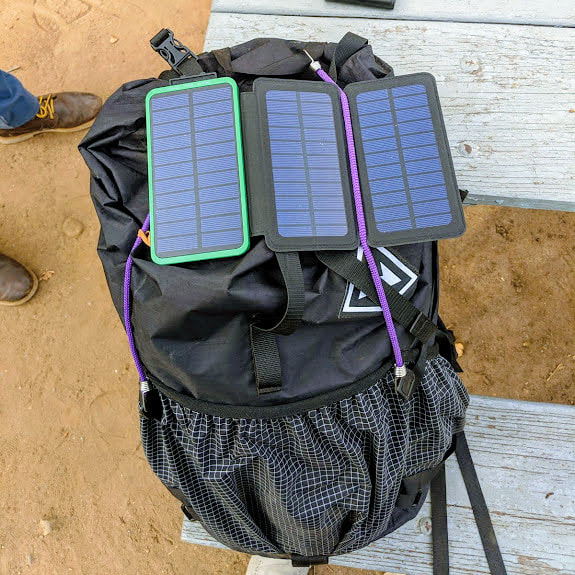
Next, you should examine the different types of power options available. There are battery banks, battery banks with solar, or solar panels on their own.
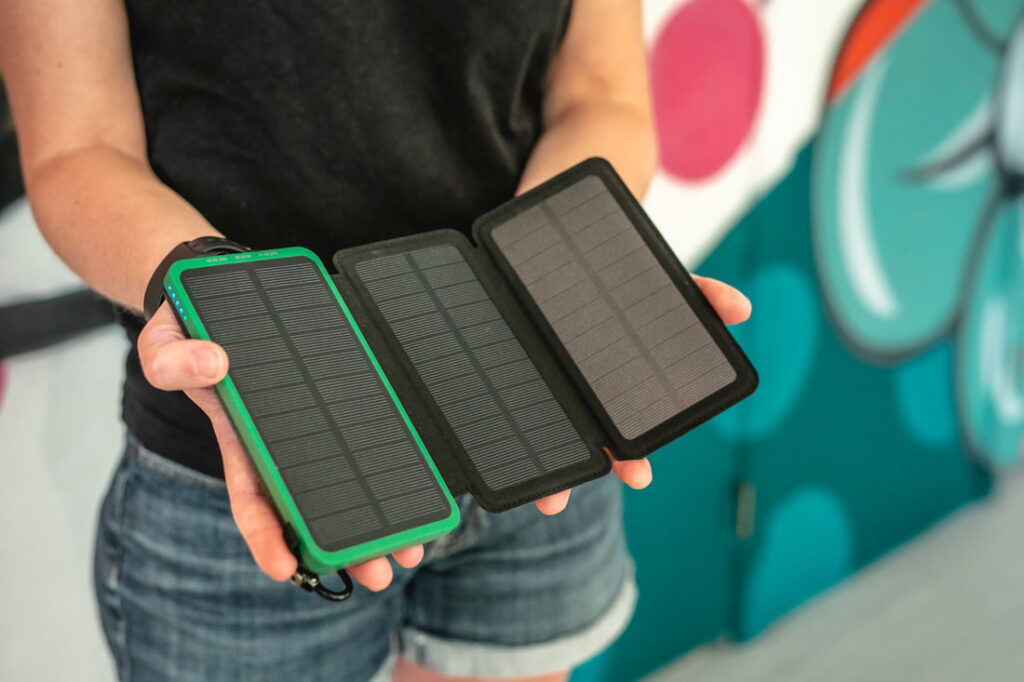
Unfortunately, many of the solar battery banks available have a solar panel that is much too small to be effective at refilling the bank. That is why our Chandler Charger has three, foldable solar panels. This generates approximately 2000 mAh per day to refill the 8000 mAh battery. Given the example above where you need approximately 1500 mAh per day, this size of solar panel would keep your battery pack full most days, and you’d have excess capacity for any rain or extra use.
Time to Shop!
Taking all of these options into account, you now need to make a decision. Every trip may be different but in general, you should think through your most common use cases. Are you hiking in the high Sierras of California where there is ample sun exposure? Or are you hiking through the woods in New Hampshire, where tree cover is significant? Do you normally trek for a weekend, or are you embarking on a much longer journey?
Thankfully, power options are becoming more and more affordable, and over time, you may acquire a variety of solutions for different types of trips.
We hope these tips help you find the right power source to keep you safe and powered up on the trails. When deciding on a battery bank, we hope you consider our Chandler Charger. We are a nonprofit organization with a mission to light the world and for every Charger we sell, we donate one to someone living without electricity. To learn more about our programs, visit this page.
Bringing Light to Families Displaced in South Sudan In early March 2026, extreme violence in Abiemnhom County devastated entire communities,
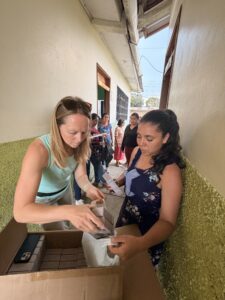
From Santa Barbara to the Mountains of Honduras: Helping the Helpers Last year, we celebrated the International Day of Light

Lighting Recovery: A Disaster Response Partnership in Hawaii When severe flooding swept across Oahu in Spring 2026, hundreds of families