
Bringing Light to Families Displaced in South Sudan
Bringing Light to Families Displaced in South Sudan In early March 2026, extreme violence in Abiemnhom County devastated entire communities,

Published January 18, 2019 · Updated August 26, 2026
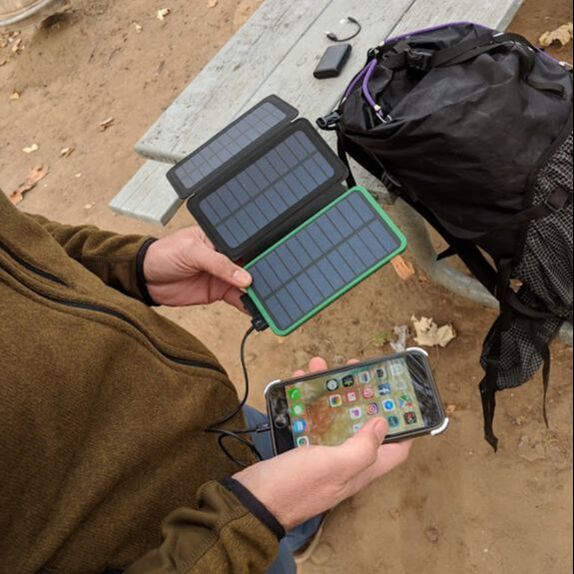
Whether it’s for work, fun or in an emergency, our electronics are crucial tools. We depend on them to stay safe and connected. Trekking adventures, preparedness, and #VanLife are more than just fads, they are ways of life. When we disconnect from the grid, intentionally or unintentionally, we want our power. Solar charging and battery power are essential.
The right charging unit can keep your battery full almost indefinitely, without endangering your electronics or costing too much. Unfortunately, there is a proliferation of low-quality products on the market. This guide will help you decide what type of solar charger and battery bank is right for you.
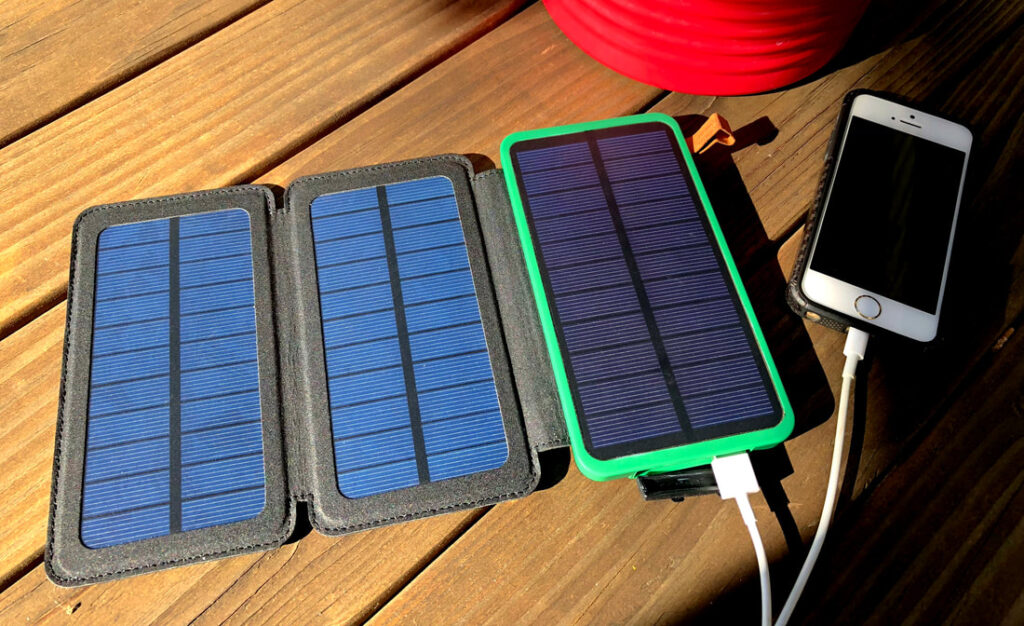
This is an example of a 3.75watt solar panel unit pictured next to an iPhone 5 for size reference. It measures 15.5 cm X 24.6 cm (6.10″ X 9.69″) when fully opened but the panels are foldable so it packs down to 15.5cm X 8.2cm (6.10″ X 3.23″). Foldable panels like these give you the power you need without sacrificing portability.
3. Choose the right power output
Depending on the type of device(s), you may want to consider power output – or how fast a device can be charged. For this, you need to know the amps and volts of the charger. In general, the higher the amps, the faster the charge (some phones, like the iPhone, will only draw 1 amp, regardless of how many amps the charger has, but will not be harmed from a higher amp device). For a tablet, with a larger battery, you may want to consider a charger that has a 2 amp output to avoid extended charging times.
Some units may also have multiple outputs so that you can charge more than one device at a time. Most devices have shared circuitry where multiple devices will compete for the power. If you have a 2 amp circuit and are charging two cell phones pulling 1 amp each, this is not a problem. But if you don’t have enough power output, charging multiple devices (like two tablets) at the same time can significantly slow down the charging time for both units. In contrast, some devices have split circuitry, where each port has its own circuitry and can maximize the charging rate for each port.
4. Account for Safety and Longevity
There are two considerations that can help you understand how safe your device is:
Quality
With solar chargers or any battery pack, quality goes beyond the device itself. A low-quality product has the potential to harm the devices you are charging. Look for terms like “overcharge” protection that will protect the battery of your phone. “Overcurrent” protection is another important feature that limits the amount of power going in and out of the device to protect the circuitry on both devices. A good quality device will mention its safety features.
Compliance
There are certifications that can help you assess the safety and performance of a device. CE and FCC certifications should be the bare minimum for any electronics. For solar lights, there is also the Lighting Global standard which is a World Bank initiative that supports sustainable growth of the international off-grid solar market by verifying the performance of solar lighting products.



5. Select other Key Features
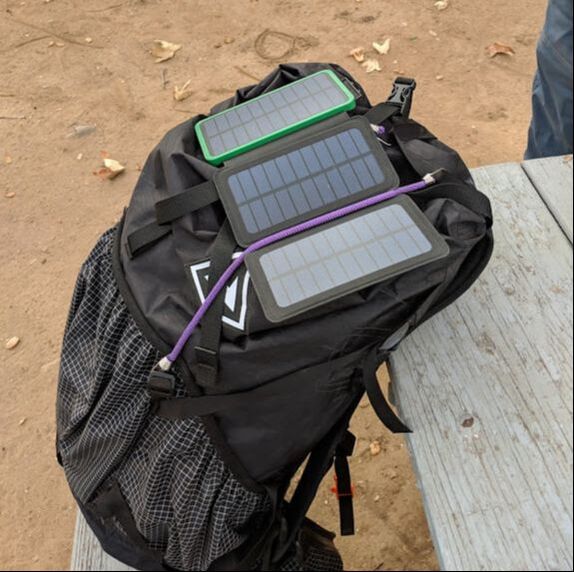
Now that you have your basics covered, you may want to explore other key features, such as portability. If you plan to use the unit for backpacking or camping you want to ensure the unit is lightweight and transportable. Check to see if it can be secured to a pack while in transit so you can take advantage of daylight hours to power up the battery.
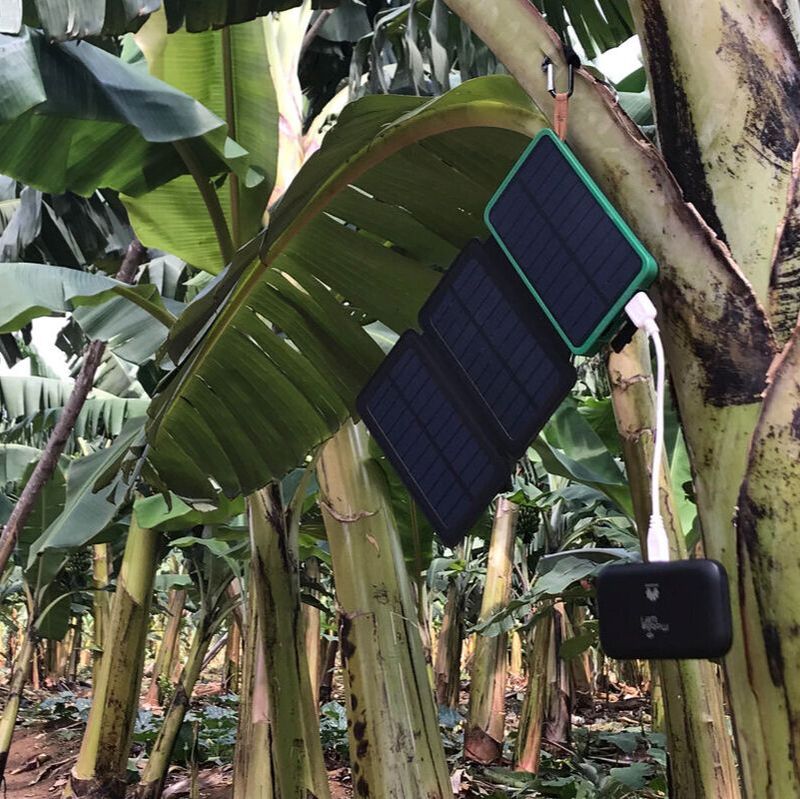
If you aren’t going to be mobile with your solar charger, then you may want to consider units that have separate solar panels and battery packs. This would allow you to permanently affix a solar panel to a roof, plug in the battery pack during the day for charging, and unplug it for use at night. These systems often have larger solar panels that do not require ease of transportation.
Lighting is another common feature on solar battery packs. A powerful light erases the need for a flashlight if you’re planning on using it for backpacking or camping and can be very useful in your emergency preparedness kit.
Some companies (like us here at Unite to Light) also have a social mission. For every one of our Solar Chargers you buy, we donate one to someone living without electricity or impacted by a disaster. We call it Buy One, Give One (BOGO).
We make three solar products, and the right one depends on what you need light and power for.
Luke Light — $24, a reading and task light. A sealed 3.7 V, 600 mAh (2.2 Wh) battery charged only by its own solar panel, up to 16 hours of light on a full charge, waterproof and small enough to fold into your palm. Choose it when you need dependable light for studying, working, or reading after dark. It does not charge phones.
Chandler Charger — $70, a solar power bank. An 8,000 mAh (29.6 Wh) battery with three efficient solar panels and a built-in flashlight, enough to charge a phone three to four times. Choose it when phone and small-electronics power is the priority.
Haven Lantern — $80, a 3-in-1 lantern, flashlight, and power bank. Up to 1,200 lumens across eight light modes, 120 hours of light on the lowest setting, and a 10,000 mAh (37 Wh) battery that charges devices over USB-C. It collapses flat, hangs or stands by its handle, and carries an IPX6 waterproof rating. Choose it when you need to light a whole room or campsite — a tent, a shelter, a clinic, a blackout at home — and want the power bank built into the same device.
All three come with Buy One, Give One: every purchase sends an identical product to someone living without electricity.
Summary
The key to finding the right solar charger and battery pack is identifying how you’ll be using the charger and finding a product that fits those needs. Many units focus on supplying a larger battery instead of sufficient solar panels, but if you’re going to be off grid for multiple days, solar panels are crucial. From there, focus on quality to protect your devices and the charger itself. The right device provides the power you need, wherever you are.
Match watt-hours to the devices you carry. Multiply the battery’s amp hours by its voltage: our Chandler Charger holds 8,000 mAh (8 Ah) at 3.7 V, or 29.6 Wh, which refills a typical smartphone three to four times. One phone charge runs roughly 10–15 Wh, so a weekend for one person needs about 30 Wh, while a week off grid for two people is closer to 100 Wh plus a panel large enough to keep refilling it.
Plan on days, not hours, for panel-only charging. The Chandler Charger takes four to five days of direct sun to fill from empty, gaining about three-quarters of a phone charge per sunny day. The Haven Lantern refills in about seven hours over USB-C, or you can top it up with its monocrystalline panel. Keep the panel angled at the sun and clean, and start every trip with a full battery.
Pick by the job. A power bank like the Chandler Charger is for keeping phones and small electronics alive. A lantern like the Haven Lantern lights a whole room or campsite — up to 1,200 lumens, 120 hours on its lowest setting — and carries a 10,000 mAh (37 Wh) power bank inside it. If you need both light and power from one device, the lantern is the better buy.
Yes, within airline limits. Power banks fly in carry-on only, and as of 2026 most airlines allow two per passenger, each under 100 Wh. The Chandler Charger (29.6 Wh) and Haven Lantern (37 Wh) are both well under that ceiling. The Luke Light (2.2 Wh) has no charging port and travels in carry-on or checked luggage, switched off. See our full FAA guidelines.
Every Unite to Light product makes light — the difference is how much power comes with it. The Luke Light ($24) is light only: a sealed 2.2 Wh battery, up to 16 hours of reading light, and no ports to charge anything else. The Chandler Charger ($70) is a power bank with a built-in high-lumen flashlight, so it refills a phone three to four times and gives you a work light for emergencies and everyday use. The Haven Lantern ($80) lights a whole room at up to 1,200 lumens with a 10,000 mAh (37 Wh) power bank inside. Choose by how much light you need and whether you also need to keep devices charged.
Bringing Light to Families Displaced in South Sudan In early March 2026, extreme violence in Abiemnhom County devastated entire communities,

From Santa Barbara to the Mountains of Honduras: Helping the Helpers Last year, we celebrated the International Day of Light

Lighting Recovery: A Disaster Response Partnership in Hawaii When severe flooding swept across Oahu in Spring 2026, hundreds of families