From Santa Barbara to the Mountains of Honduras: Helping the Helpers
From Santa Barbara to the Mountains of Honduras: Helping the Helpers Last year, we celebrated the International Day of Light

Published June 30, 2021 · Updated February 18, 2026
The 2020 Annual Homelessness Assessment Report to congress (pre-pandemic), reported a 2% increase in the homeless population of the US over the previous year and a 7% increase in people sleeping outdoors. While many urban areas have resources for people experiencing homelessness, they can be difficult to find without internet access and a charged mobile phone. This became increasingly problematic during COVID-19 shutdowns as public buildings like libraries and even coffee shops closed their doors, leaving people on the street with no access to electricity and dwindling resources.
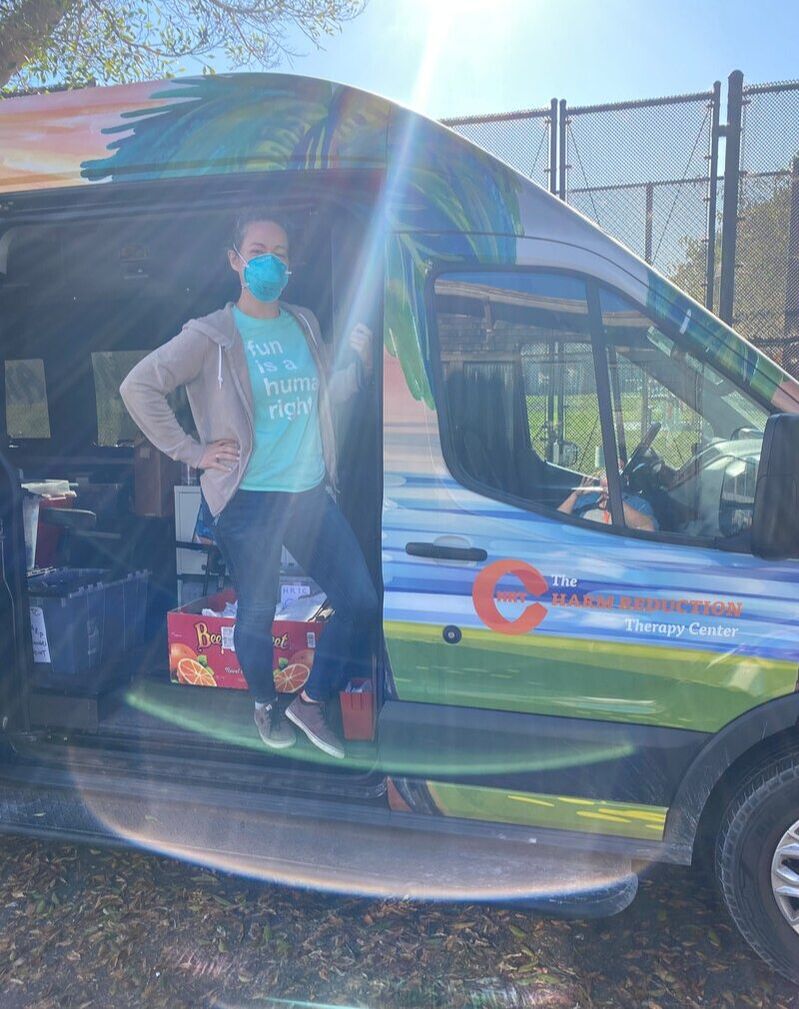
During the COVID-19 pandemic, Unite to Light provided over 3,000 of our Chandler Chargers to people experiencing homelessness across the US. These simple solar powered battery banks offered a piece of stability to those struggling with uncomfortable unknowns everyday. An integral part of this program was our distribution partners who are on the front lines helping people experiencing homelessness every day. One of those partners was the Harm Reduction Therapy Center (HRTC), established to bring therapeutic services to the San Francisco homeless population.
HRTC’s mobile therapy program meets clients where they are, literally. Mobile therapists connect with people who need help but don’t fit into traditional substance use treatment programs and mental health clinics. HRTC’s therapists are able to work with clients to address issues, establish goals, and create a realistic plan to achieve those goals. In this line of work, therapists try to maintain communication with their clients through continuous check ins. In many cases, our Chandler Chargers made that possible during COVID. Through our Buy One Give One donations and a private foundation grant, Unite to Light donated 175 Chandler Chargers to HRTC who then gifted them to those most in need of power for their phones.
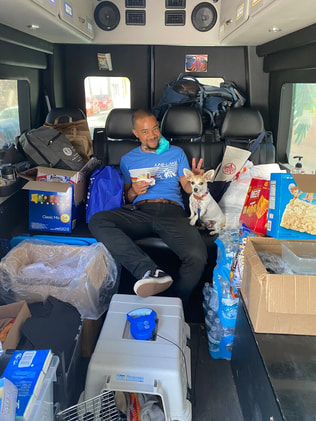
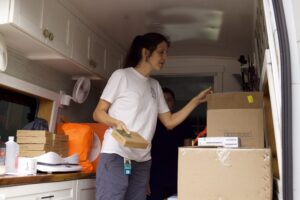
Jason, a HRTC Therapist inside the mobile resource center and Zaychik, the HRTC therapy mascot.
HRTC Therapists engage with clients from diverse backgrounds who oftentimes have low trust in mental health services. With the help of the Chargers, HRTC is able to support clients’ basic needs, leading to longer-term therapeutic relationships. One therapist shared an experience where a client experienced a potential concussion. 911 was called and an ambulance showed up but the client decided not to go. They gave him a Charger so he could at least have a working phone if his symptoms got worse, which made everyone (including the client) feel much more at ease. Therapist Nancy Mullin said, “Thank you SO much! It’s a total engagement tool. I’ve had people thank me weeks later.”
Access to electricity is something that we take for granted, especially in the United States. At Unite to Light, we are honored to partner with other organizations, like The Harm Reduction Therapy Center that are spreading light to our world through their important work and our Chandler Chargers.
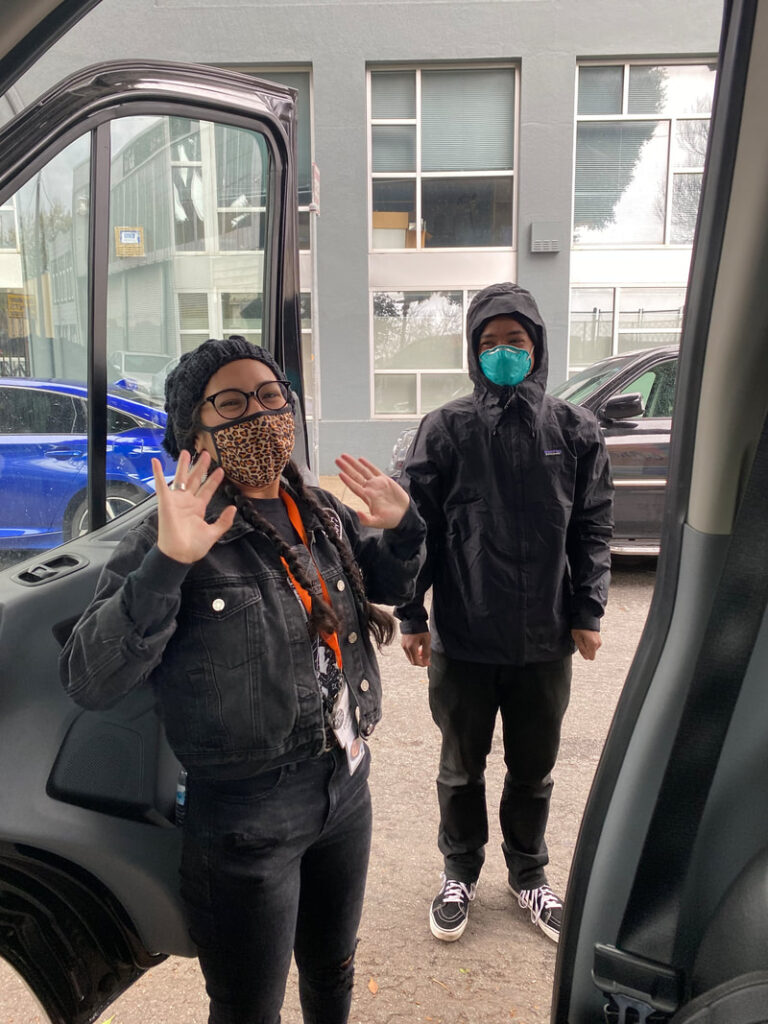
Danielle and Jason, both HRTC Therapists getting ready for a fulfilling day meeting with clients and supporting them in their needs.
From Santa Barbara to the Mountains of Honduras: Helping the Helpers Last year, we celebrated the International Day of Light
Lighting Recovery: A Disaster Response Partnership in Hawaii When severe flooding swept across Oahu in Spring 2026, hundreds of families
Powering Recovery After Hurricane Melissa When Hurricane Melissa hit Jamaica on October 28, 2025, it became the strongest hurricane ever